
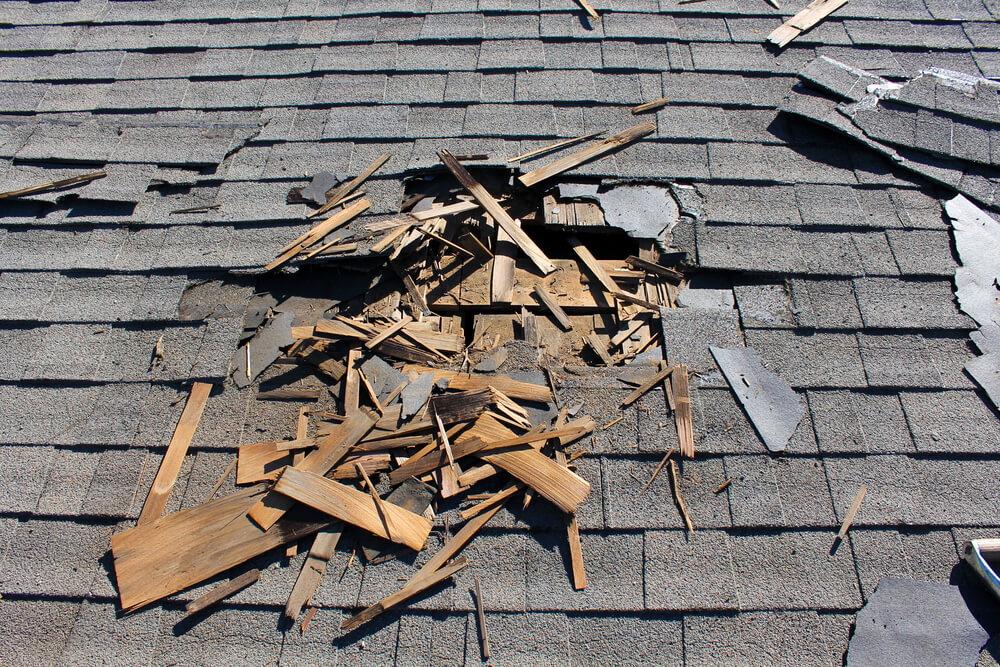
Ottawa’s summer storm season brings powerful thunderstorms, high wind events, and occasional hail that can damage a residential roof in minutes. When it happens, the decisions you make in the first 48 hours have a significant effect on your insurance outcome, your repair costs, and how quickly your home is protected again.
Most homeowners in Stittsville and the Ottawa area have never filed a roof damage claim and are not sure what to do when shingles are scattered in the yard or water starts showing up where it should not be. This guide covers the steps to take in order, what your insurance does and does not cover, how to avoid common mistakes, and when to call a professional.
Key Takeaways
- Document the damage yourself before calling anyone. Date-stamped photos and video of the exterior, the attic, and any interior damage are the single most important thing you can do for your insurance claim.
- Call your insurer directly and open the claim yourself. Do not let a contractor open the claim on your behalf.
- Be cautious of door-to-door contractors who appear after a storm. Many are not local, not insured in Ontario, and will not be available when warranty issues arise.
- Ontario homeowner insurance typically covers sudden storm damage (wind, hail, fallen trees, lightning). It does not cover damage caused by wear and tear, aging, or lack of maintenance.
- Do not complete permanent repairs before the insurance adjuster has inspected the damage. Emergency tarping to prevent further water intrusion is acceptable and expected.
Step 1: Stay Safe and Assess from the Ground
Before anything else, confirm that the structure is safe to approach. If there are downed power lines near the house, standing water in the basement, or visible structural damage to the roof framing, stay away and call the appropriate emergency service first.
Once safety is confirmed, do a visual assessment of the exterior from the ground. Walk the perimeter of the house and look for missing or displaced shingles, damaged flashing, eavestrough sections that have pulled away, broken vent covers, and debris that may have struck the roof surface. Check the downspouts for blockage. Look at the siding, windows, and fascia for collateral damage.
Do not get on the roof. A storm-damaged roof may have compromised sheathing or loosened materials that are not visible from above until weight is applied. Leave the close-up inspection to a professional with the right equipment and training.
Step 2: Document Everything
This is the most important step for your insurance claim and the one homeowners most often do inadequately.
Photograph and video the damage from as many angles as possible. Capture wide shots that show the overall roof surface and close-up shots of specific damage areas. Include the yard and surrounding property if there are fallen branches, displaced shingles on the ground, or damaged landscaping. If you can safely access the attic, photograph any signs of water intrusion, wet insulation, or daylight visible through the roof deck.
Inside the house, photograph any water stains on ceilings or walls, wet flooring, and any personal property that has been damaged by water. Date-stamp everything. If your phone camera does not automatically embed the date in metadata, photograph a piece of paper with the date written on it alongside the damage.
Thorough documentation serves two purposes. First, it gives your insurer clear evidence of the scope and timing of the damage. Second, it gives you an independent record if the adjuster’s assessment does not fully capture the extent of the problem.
Step 3: Prevent Further Damage
You are expected by your insurer to take reasonable steps to prevent additional damage after a storm. This is sometimes called “mitigating further loss” and it is a standard condition in Ontario homeowner insurance policies.
If shingles are missing and the underlayment or decking is exposed, tarping the affected area prevents water from the next rainstorm from entering the structure. If a tree or branch has punched through the roof, covering the opening with a tarp and securing it is the right immediate action.
Keep receipts for any materials you purchase for temporary repairs. These costs are typically reimbursable as part of the claim. Do not complete permanent repairs before the adjuster has inspected the damage. If you replace shingles or repair flashing before the adjuster sees the original damage, you risk having the claim reduced or denied because the insurer cannot verify the extent of the loss.
Step 4: Contact Your Insurance Company Directly
Call your insurer and open the claim yourself. Get a claim number. This is important: do not let a roofing contractor open the claim on your behalf. Some contractors, particularly transient operators who canvas neighbourhoods after storms, offer to “handle the insurance for you.” This can create complications with your claim and puts someone else in control of the process.
Most Ontario insurance policies require notification within a specific window after discovering damage. While policies vary, contacting your insurer within 24 to 48 hours of the storm is a reasonable standard. Even if you are not yet sure of the full extent of the damage, opening the claim promptly protects your eligibility.
Your insurer will assign an adjuster to inspect the damage. The adjuster works for the insurance company, not for you. Their job is to assess the damage and determine the payout under your policy terms. This is why your own documentation and, ideally, an independent assessment from a roofing professional are valuable. They provide a second perspective that you can reference if the adjuster’s findings do not fully reflect the damage.
Step 5: Get an Independent Assessment from a Roofing Professional
Before or after the adjuster visits, have a qualified roofing contractor inspect the damage independently. A professional assessment serves as your own documented record of the damage scope and provides a written estimate for repairs.
A good contractor will identify damage that is not visible from the ground, including compromised underlayment, loosened nailing, and damage to flashings around penetrations. They will also distinguish between storm damage and pre-existing wear, which matters because insurance covers the former but not the latter.
When choosing a contractor for a storm damage assessment, the same principles apply as any roofing hire: verify WSIB and liability insurance, confirm they are a local business with a verifiable address, and ask whether their crew are employees or subcontractors. Storm season brings an influx of transient operators into Ottawa every year. Some knock on doors the day after a storm offering free inspections. Many are not insured in Ontario and will not be available when warranty issues surface months or years later.
What Ontario Homeowner Insurance Typically Covers
Understanding what your policy covers before you need to file a claim is valuable, but most homeowners first look into this after damage has already occurred.
Ontario homeowner insurance policies generally cover roof damage caused by sudden, accidental events that are outside the homeowner’s control. This includes windstorms, hail, fallen trees and branches, lightning strikes, and the weight of ice and snow accumulation.
What insurance does not cover is equally important. Damage caused by wear and tear, aging, gradual deterioration, lack of maintenance, moss or algae buildup, and slow leaks that developed over time are excluded from standard policies. If an adjuster determines that the storm exposed a pre-existing condition rather than causing new damage, the claim may be denied or reduced.
This distinction matters practically. A roof that was in good condition before the storm and sustained clear wind or hail damage will have a straightforward claim. A roof that was already 25 years old with visible deterioration and then lost shingles during a storm is more likely to face pushback from the insurer, who may argue that the damage was partly or entirely due to age rather than the storm event. To learn more about when to know when you need a roof read our article on the 9 signs you need a new roof.
Maintaining your roof, keeping documentation of any professional inspections or recent work, and having a current inspection report on file all strengthen your position if a claim becomes necessary.
ACV vs. RCV coverage: Two common policy types affect your payout significantly. Actual Cash Value (ACV) coverage pays the depreciated value of your roof at the time of the loss, meaning the older your roof, the less you receive. Replacement Cost Value (RCV) coverage pays the full cost to replace your roof with equivalent new materials, regardless of age. Many Ontario homeowners do not know which type they have until they file a claim. Check your policy now, before you need it.
Common Mistakes to Avoid After Storm Damage
- Completing permanent repairs before the adjuster inspects.** Emergency tarping is fine and expected. Replacing shingles, repairing flashing, or completing any permanent work before the adjuster sees the original damage can result in a reduced or denied claim.
- Letting a contractor open the claim for you. Open the claim yourself, directly with your insurer. Keep control of the process.
- Signing a contract with a door-to-door storm chaser. After a significant storm event, transient contractors canvass affected neighbourhoods offering free inspections and immediate repairs. Some are legitimate, but many are not local, not insured in Ontario, and will not be available for warranty work. Verify everything before signing anything.
- Waiting too long to notify your insurer. Policies have notification requirements. Contact your insurer within 24 to 48 hours, even if the full extent of the damage is not yet clear.
- Discarding damaged materials. Keep damaged shingles, flashing, or other materials until the adjuster has completed their inspection. They may need to examine them.
How Tailored Home Improvements Handles Storm Damage
At Tailored Home Improvements, we serve homeowners across Stittsville, Kanata, Barrhaven, Nepean, and surrounding Ottawa west communities who need help after a storm.
We provide free storm damage assessments with photo documentation of our findings. Our assessments identify the full scope of the damage, distinguish between storm damage and pre-existing conditions, and give you a written record you can use alongside the adjuster’s report. We use drone technology to document the roof surface thoroughly without unnecessary foot traffic on a potentially compromised structure.
Every member of our crew is a full-time employee. We carry WSIB coverage and liability insurance, and we provide documentation of both. We do not knock on doors after storms looking for work. If you call us, we show up, assess honestly, and give you a straight answer about what your roof needs.
If the damage requires a full replacement, we install every roof with six to eight nails per shingle and six feet of Resisto ice and water shield as standard practice, backed by a 50-year manufacturer warranty and a 20-year workmanship guarantee.
Request a free storm damage assessment →
Frequently Asked Questions
Does my homeowner insurance cover storm damage to my roof in Ontario?
Generally, yes. Ontario homeowner insurance policies typically cover roof damage caused by sudden, accidental events including windstorms, hail, fallen trees, lightning strikes, and ice accumulation. Damage caused by wear and tear, aging, lack of maintenance, or gradual deterioration is not covered. The distinction matters because an insurer may argue that a storm exposed a pre-existing condition rather than causing new damage, particularly on older roofs.
What should I do first after a storm damages my roof?
Confirm it is safe to approach the property, then document the damage thoroughly with date-stamped photos and video of the exterior, the attic, and any interior water damage. Take reasonable steps to prevent further damage (tarping exposed areas). Then contact your insurer directly to open a claim and get a claim number. Do not complete any permanent repairs before the adjuster has inspected.
Should I let a roofing contractor handle my insurance claim?
No. Open the claim yourself by calling your insurer directly. Some contractors, particularly those who appear door-to-door after a storm, offer to handle the insurance process on your behalf. This can create complications and puts someone else in control of your claim. Your contractor should provide an independent damage assessment and estimate, but the claim itself should remain in your hands.
How quickly should I contact my insurance company after storm damage?
Within 24 to 48 hours of discovering the damage. Most Ontario policies have notification requirements, and contacting your insurer promptly protects your eligibility. Even if you are not yet sure of the full extent of the damage, opening the claim early is the right step.
How do I know if a storm damage contractor is legitimate?
Verify their WSIB coverage at wsib.ca, ask for a copy of their liability insurance certificate, confirm they have a verifiable local business address, and ask whether their crew are employees or subcontractors. Be cautious of contractors who appear at your door immediately after a storm, who pressure you to sign quickly, or who offer to handle your insurance claim for you. Local, established contractors do not need to chase storms for work.