
Your roof doesn’t fail all at once. It sends warnings, sometimes for years, before the real damage sets in. The problem is that most Ottawa and Stittsville homeowners don’t know what to look for until water is dripping through the ceiling or shingles are scattered across the backyard after a storm.
This guide covers the nine most important warning signs that your roof may need to be replaced, why Ottawa’s climate makes these signs appear faster than in other parts of the country, and what you should do when you spot them.
Why Ottawa Roofs Wear Out Faster Than You Might Expect
Ottawa’s climate is one of the most demanding in Canada for roofing materials. Winters bring heavy snow loads and sustained freezing temperatures. Summers push well above 30°C. And throughout the shoulder seasons, the region experiences repeated freeze-thaw cycles that are particularly destructive to roofing systems.
When temperatures fluctuate above and below freezing, moisture that has worked its way into small cracks in shingles or flashing freezes, expands, and forces those cracks wider. Over dozens of cycles each year, that process compounds. It accelerates wear in ways that simply don’t occur in milder climates.
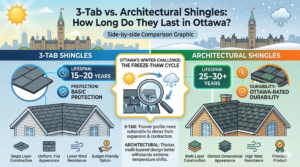
The practical result is a shorter service life for roofing materials. A 3-tab asphalt shingle roof in Ottawa typically lasts between 15 and 20 years. Architectural shingles perform significantly better, with a lifespan of 25 to 30 years or more under good conditions — proper installation, adequate ventilation, and routine maintenance all factor into where on that range a roof lands.
Understanding this context matters because warning signs on an Ottawa roof carry more urgency than they might elsewhere. When they appear, they deserve prompt attention.
The 9 Signs You Need a New Roof
1. Your Shingles Are Curling, Cupping, or Buckling
Healthy shingles lie flat. When you start seeing edges that curl upward (called cupping) or middles that push upward while edges curl down (called clawing), your shingles are telling you their useful life is running out.
Curling happens when the asphalt in the shingle dries out and begins to shrink over time. Heat, UV exposure, and poor attic ventilation all accelerate the process. In Ottawa’s climate, south-facing slopes (which take more direct sun in the summer) often show curling years before the north-facing side of the same roof.
Once shingles start curling, they become significantly more vulnerable to wind uplift. A typical summer windstorm in Ottawa can tear curled shingles off entirely.
What to do: Curling that is widespread across the roof, not just isolated to a few shingles, is almost always a sign that replacement, not repair, is the right call.
2. You’re Finding Granules in Your Gutters or on the Ground
Look in your eavestroughs after a rainstorm. If you’re finding what looks like coarse dark sand or gravel: that’s granule loss, and it matters more than most homeowners realize.
The granules embedded in asphalt shingles serve a critical function: they protect the asphalt layer beneath from UV degradation. Once granules are gone, the underlying asphalt is exposed directly to sunlight. It dries out, becomes brittle, and ages rapidly. What could have been a gradual decline becomes a fast one.
Some granule loss is normal on a newer roof; manufacturers typically apply extra granules that shed in the first year. What you’re watching for is heavy, sustained granule accumulation in your gutters or bare patches visible on the shingles from the ground. Dark patches on light shingles, or lighter patches on darker ones, are what this looks like from below.
What to do: Granule loss on a roof that’s more than 15 years old is a strong signal that replacement is approaching. On a newer roof, it may indicate a manufacturing defect or installation issue worth investigating.
3. You Have Missing or Cracked Shingles
Missing shingles after a windstorm are obvious. Cracked shingles are subtler, but in some ways more concerning: they indicate that the asphalt has dried out to the point of becoming brittle.
In Ottawa, shingles become brittle at freezing temperatures. During a winter wind event, brittle shingles crack and break rather than flex. This is partly why the nailing standard matters so much: shingles installed with the minimum four nails per shingle are significantly more likely to lift and go missing during high-wind events than those installed with six to eight nails.
A missing shingle or two doesn’t automatically mean you need a full replacement; targeted repairs can address isolated damage. But cracking that is widespread across the roof surface is a sign of systemic aging, and patching becomes a losing battle.
What to do: After any significant windstorm, do a visual scan of your roof from the ground or have a professional take a look. The longer a shingle is missing, the more opportunity there is for water to penetrate the underlayment beneath it.
4. You’re Seeing Water Stains or Moisture in Your Attic
Head into your attic on a bright day and look up. If you can see daylight through the roof boards, water has a clear path in. Even without visible light, water stains on the rafters or decking, or any sign of active moisture or mold, tell you that your roof is no longer doing its primary job.
Water stains in your attic don’t always mean your shingles have failed; the culprit is often faulty flashing around chimneys, skylights, or vents. But persistent attic moisture combined with an aging roof is a clear indicator that action is needed.
Mold in a poorly ventilated attic can become a serious health concern for your household and can spread to wall cavities if left unchecked. Once mold is established, remediation costs can rival the cost of a roof replacement itself.
What to do: An attic inspection should be part of every professional roof assessment. If you haven’t been up there in a few years, it’s worth a look, or ask a roofer to include it in their assessment.
5. Your Ceilings or Interior Walls Are Showing Water Damage
By the time a leak reaches your ceiling, water has already been working its way through multiple layers (shingles, underlayment, decking, insulation) for some time. Interior water stains or bubbling paint near the roofline are a late-stage warning sign.
It’s worth noting that the location of the interior stain doesn’t always match the location of the roof leak. Water travels along rafters and decking before dripping down, so a stain in your bedroom ceiling may originate from a leak over your bathroom or hallway.
What to do: Don’t wait. Any active interior water damage from a roof source needs professional attention immediately. The longer you wait, the more likely you are to be dealing with damaged decking, compromised insulation, and potential mold, all of which add cost to what might otherwise be a straightforward replacement.
6. Your Roof Is Sagging
A sagging roofline is one of the most serious signs on this list. It indicates structural compromise, typically water-damaged decking or deteriorating support structures beneath the shingles.
A sagging roof is not a repair situation. It requires immediate professional assessment and, in almost all cases, full replacement with attention to the underlying structure.
Watch for sagging not just in the middle of the roof but along the ridgeline and at the eaves. Any area where the roofline has lost its straight, consistent profile deserves attention.
What to do: If you notice any sagging, call a roofing professional promptly. Do not delay this one.
7. You’re Experiencing Ice Dams Every Winter
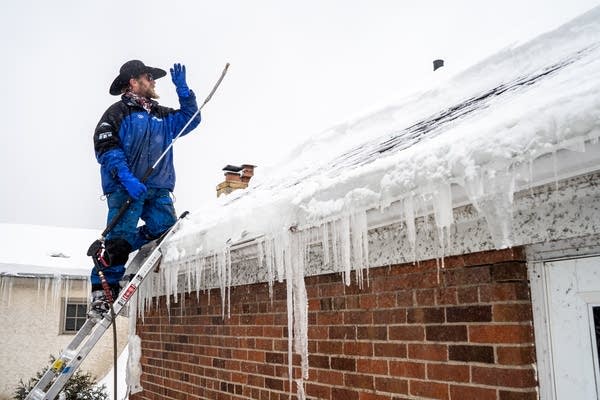
Ice dams, the thick ridges of ice that build up along the eaves of Ottawa homes every winter, are not just a nuisance. They’re a symptom.
Ice dams form when heat escapes from the living space into the attic, warms the roof deck, and melts snow that then runs down to the colder eaves and refreezes. The resulting ice ridge traps meltwater behind it, forcing water back up under the shingles where it causes leaks, rot, and damage.
If you’re getting ice dams every winter, it means your attic insulation, ventilation, or both are not performing adequately. A new roof alone won’t solve an ice dam problem, but if your roof is also aging, combining a replacement with improved attic insulation and ventilation is a smart, cost-effective approach.
Ottawa’s extended winters make this particularly relevant. The longer the cold season, the more cycles of snow accumulation, partial melt, and refreeze your eaves experience.
What to do: Persistent ice damming warrants both a roof inspection and an attic assessment. Addressing the root cause (heat loss) protects whatever roof you put on.
8. Your Energy Bills Are Climbing Unexpectedly
A roof that is no longer performing well allows conditioned air to escape more easily. If your heating bills have risen significantly without a clear explanation, your roof and attic insulation deserve scrutiny.
This sign is often overlooked because homeowners attribute rising energy costs to fuel prices rather than building performance. But a compromised roof, particularly one with failing underlayment or damaged decking, allows your attic to exchange air with the outside far more freely than it should.
Inadequate attic ventilation also forces your air conditioning to work harder in summer, as a poorly ventilated attic can reach extreme temperatures on hot Ottawa afternoons.
What to do: If you’ve noticed a pattern of rising energy costs alongside an aging roof, include an energy efficiency discussion in your consultation with a roofing contractor. An attic insulation upgrade at the time of roof replacement is often one of the most cost-effective home improvements available.
9. Your Roof Is More Than 15–20 Years Old (and You Have 3-Tab Shingles)
Age alone is not a definitive reason to replace a roof, but it is the most important piece of context for interpreting every other sign on this list.
In Ottawa’s climate, 3-tab asphalt shingles (the flat, single-layer shingles common on homes built before the mid-2000s) typically reach the end of their reliable service life between 15 and 20 years. If your home has 3-tab shingles that are approaching or past that range, even minor signs of wear are worth taking seriously. What might be a simple repair on a 10-year-old roof becomes a band-aid on a 20-year-old one.
Architectural shingles (also called laminate or dimensional shingles) are significantly more durable; well-installed architectural shingles can last 25 to 30 years or more in Ottawa conditions. If you’re not sure what type of shingles you have, a roofing professional can identify them quickly.
What to do: If you don’t know when your roof was last replaced, check your home inspection report from when you purchased the house, or ask a professional to assess the approximate age and condition.
How Tailored Home Improvements Approaches Roof Assessments
When we inspect a roof in Stittsville or the surrounding Ottawa west communities, we’re not just looking for the obvious: missing shingles or active leaks. We look at the whole system: the nailing pattern, the condition of the ice and water shield at the eaves and valleys, the state of the flashings, the ventilation in the attic, and the decking beneath.
One thing we check on every assessment is the nailing pattern. Industry standard calls for four nails per shingle. We install six to eight. When we’re inspecting a roof that was done by someone else and we find four-nail patterns on a roof that’s already showing wind damage, that tells us a lot about how the rest of the job was done.
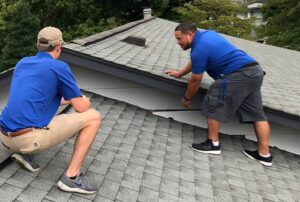
We also use drone technology for our roof inspections, letting us see the full surface clearly and document the condition with photos, without unnecessary foot traffic on a roof that may already be compromised. You get honest, photo-backed findings and a straight answer about whether you need a repair or a full replacement.
If you’re not sure what condition your roof is in, a free inspection is the right first step.
Repair or Replace? A Simple Framework
Not every sign on this list means you need a full replacement. Here’s a practical way to think about it:
Lean toward repair if:
- Damage is isolated to a clearly defined area (storm damage, one section of missing shingles)
- The rest of the roof is in good condition
- There’s no evidence of systemic aging (no widespread granule loss, curling, or cracking)
Lean toward replacement if:
- The roof is more than 15–20 years old
- Multiple signs from this list are present at the same time
- You’ve had the same area repaired more than once
- There is interior water damage or attic moisture
- The roof is sagging
When in doubt, get a professional assessment. The cost of an inspection is negligible compared to the cost of repairing interior water damage caused by a delayed replacement decision.
Frequently Asked Questions
How long does a roof last in Ottawa, Ontario? In Ottawa’s climate, 3-tab asphalt shingles typically last 15 to 20 years, while architectural (laminate) shingles can last 25 to 30 years or more with proper installation and ventilation. Ottawa’s freeze-thaw cycles, heavy snowfalls, and significant temperature swings between summer and winter accelerate wear compared to milder Canadian climates.
What are the first signs of a failing roof? The earliest visible signs are usually granule loss in the eavestroughs, minor shingle curling at the edges, or slight discolouration on the roof surface. Inside the home, unexplained increases in heating or cooling costs can also be an early indicator. Many homeowners don’t notice signs until they’re already well advanced, which is why a professional inspection every two to three years is worthwhile.
Should I repair or replace my roof in Ottawa? It depends on the roof’s age and the extent of the damage. Isolated damage on a roof under 15 years old is usually a repair situation. Multiple signs of wear on a roof that is 15–20 years old, or any significant damage on a roof over 20 years old, typically makes a full replacement the more cost-effective choice. A qualified roofing contractor can give you an honest assessment of which option makes sense for your specific situation.
How do I know if my roof has been properly installed? One of the key indicators is the nailing pattern. Ontario Building Code requires a minimum of four nails per shingle, but a properly installed roof in Ottawa’s wind-prone climate should have six to eight nails per shingle. You can also look for evidence of ice and water shield at the eaves; in Ottawa, six feet of coverage at all edges and valleys is the standard that provides meaningful protection against ice dam damage.
What’s the best time of year to replace a roof in Ottawa? Late spring through early fall (roughly May through October) is the ideal window. Asphalt shingle sealant requires warmth and direct sunlight to seal properly. A roof installed in cold or cloudy weather may not seal until the following spring, leaving it more vulnerable to wind events in the interim. That said, emergency replacements can and do happen in winter when necessary.
The Bottom Line
Ottawa roofs work hard. They face one of the more demanding climates in the country: snow, ice, wind, heat, and dozens of freeze-thaw cycles that test every component year after year. The signs covered in this guide are your roof’s way of communicating that it’s reaching its limits.
If you’ve spotted one or more of these warning signs on your Stittsville or Ottawa-area home, the best next step is a professional assessment. Not a sales call — a genuine inspection with honest findings and a clear recommendation.
Tailored Home Improvements offers free roof inspections with no-pressure assessments and photo documentation of what we find. If your roof needs replacing, we’ll tell you. If it doesn’t, we’ll tell you that too.
Request your free roof inspection →
Tailored Home Improvements
Thank you for taking the time to read our article! If you are in Ottawa or the Ottawa Valley and are seeking roofing, attic insulation, eavestrough, or siding professionals, contact us for a free estimate and consultation.
If you are looking to see our completed projects, head over to our Instagram or Facebook page. Tailored Home Improvements is a trusted contractor in the Ottawa area with over 250+ 5-star views. Head over to our website homepage for more information.